They are not legitimate, whatever the profile says. A recovery “agent” who replies to your post, messages you or gets recommended by another account in the thread found you because you announced a loss in public. Do not reply, do not move the conversation to Telegram or WhatsApp, and do not pay anything. Block, report, and take the details of the loss out of view.
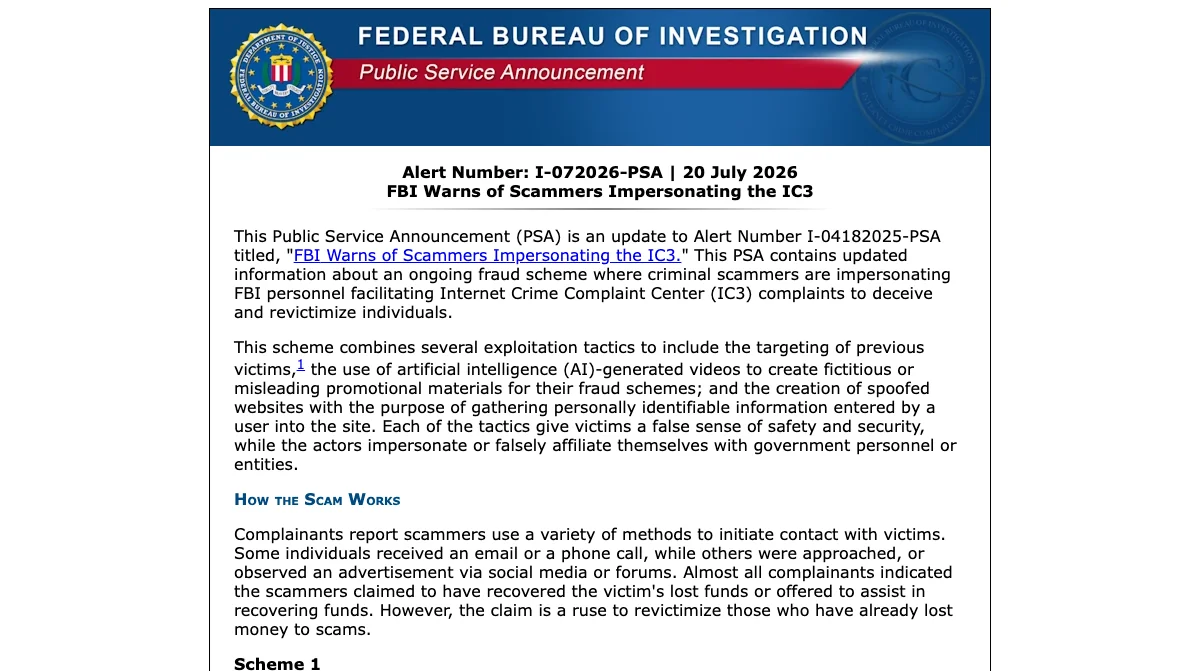
The speed is the giveaway. Replies that arrive within minutes of a post about a stolen wallet come from people watching for exactly those words. The FBI describes this as targeting previous victims: scammers reach people through social media, messaging apps and forums, claim they can recover the money, and use the claim to take more.
If the replies have already started
- Do not answer any of them, including to say no.
- Screenshot the replies and profiles, then block and report each account to the platform.
- Edit or delete anything public that shows the amount, the transaction ID, your wallet address or your exchange.
- Turn off message requests from people you do not follow, on every platform where you posted.
- Make the real reports, which are free: where to report stolen crypto.
Why they found you so fast
A public post about a crypto loss tells a stranger four useful things: you hold crypto, you are upset, you want the money back, and you are willing to talk about it online. On X it often also says which exchange or wallet was involved, and sometimes includes a transaction ID that shows the amount to the cent.
Accounts that run recovery scams search for those posts the way anyone searches for a topic. They reply under the post, send a direct message, or wait for you to ask “has anyone got their money back?” and answer that. On Reddit the reply often comes in a thread about a scam, from an account with little history. On Telegram it tends to be a message out of nowhere, after your username appeared in a group or a public comment.
None of this needs any special access. That is the uncomfortable part: the list they work from is the conversation you started.
The recommendation trick
The most convincing version does not pitch at all. One account says it lost money too and then “a specialist” got it back, and gives a name, an email address or a handle. A second and third account agree. Sometimes the same name and the same email appear under dozens of unrelated posts.
It is built to feel like word of mouth, and it is one operation talking to itself. You cannot check whether any of those people exist, and the central claim, that a confirmed transfer was reversed, is the one thing nobody can do. The FBI notice on fake law firms describes the same move dressed up formally: the “lawyers” say they are working with the FBI or another agency on your case, to make the first contact look checked.
How to recognise one in a single read
Any one of these is enough:
- They contacted you, or someone recommended them to you in a reply. Real help does not find you.
- They want to move to Telegram, WhatsApp or email. It gets you off the platform that can ban them.
- They mention the FBI, IC3 (the FBI’s Internet Crime Complaint Center), a regulator or your exchange as a partner. The FBI says IC3 does not work with law firms or crypto services to recover funds, and law enforcement does not charge fees.
- There is a fee before anything comes back, called a deposit, a tax, a “gas fee” (borrowing the name of the small network charge on crypto transfers), or a percentage up front.
- They ask for your recovery phrase (the list of words that unlocks a wallet), a wallet connection, remote access or a screen share, “to trace the funds”.
How to shut them out
You cannot stop people searching public posts, but you can make yourself much harder to reach and much less interesting to target.
- Clean up the post. Remove the amount, the transaction ID, wallet addresses and the exchange name, or delete it. Save your own copy first.
- Close the side doors. On X, Telegram and Reddit, look in the privacy or messaging settings for who can send you message requests or chats, and limit it to people you follow or approve. On Telegram, also hide your phone number from everyone.
- Block and report rather than argue. Replying, even to call it a scam, tells the operation the account is live and attentive. Report impersonation of the FBI or IC3 to the platform; the FBI asks for exactly that.
- Ask for help in a closed room. A friend, a local police officer, or the exchange’s own support reached from its website or app, not the replies.
If you already replied or paid
A reply on its own does no harm if nothing went with it. Stop now, block the account, and do not open any link it sent.
If you paid, gave a wallet connection or let anyone control your screen, stop all further payments, whatever the next message says, and treat it as a new incident: the recovery-services guide lists the steps in order, starting with your bank if you paid by card or transfer. If the person you dealt with gave you a company website, the recovery company check shows how long that site has existed and whether it is on California’s complaint list.
Read on 15 November 2026: the FBI's July 2026 notice FBI Warns of Scammers Impersonating the IC3 and its June 2024 notice on fictitious law firms targeting crypto scam victims, and Binance's How to Report Scams on Binance Support. The FTC's refund and recovery scams page was read on 16 October 2026. Privacy settings on social platforms are renamed often; the descriptions here are of what to look for, not exact menu names.
The thread, the post and the fake FBI account
Why do recovery accounts reply to my post within minutes?
Because they search for posts about losses and reply to every one they find. A real investigator, lawyer or exchange has no reason to find you through a reply on X, and none of the free reporting routes works that way. The FBI says scammers use social media and messaging platforms to contact people who have already been scammed, and that law enforcement does not charge victims for investigating. An account that replied to your post is the scam, not a way out of it.
Someone in the thread says a hacker got their money back. Is that real?
Treat it as part of the same pitch. The pattern is one account offering help and other accounts vouching for it, often with the same contact handle or email address repeated. You cannot verify any of the people in the thread, and nobody can reverse a confirmed transfer, so the testimonial changes nothing.
Should I delete my post about the scam?
If it shows the amount, the transaction ID, your wallet address or the exchange you used, yes, or edit those details out. That is the information the replies are built on. Keep your own copy of everything first, because the reports you file will need it.
A Telegram account says it is the FBI or IC3 and has my case. What now?
Block it and report it to Telegram. The FBI says IC3 has no social media presence, will never contact you directly, and does not recover funds through Facebook, Telegram or similar platforms. If an investigator needs more from you, the contact comes from an FBI field office or local police.